
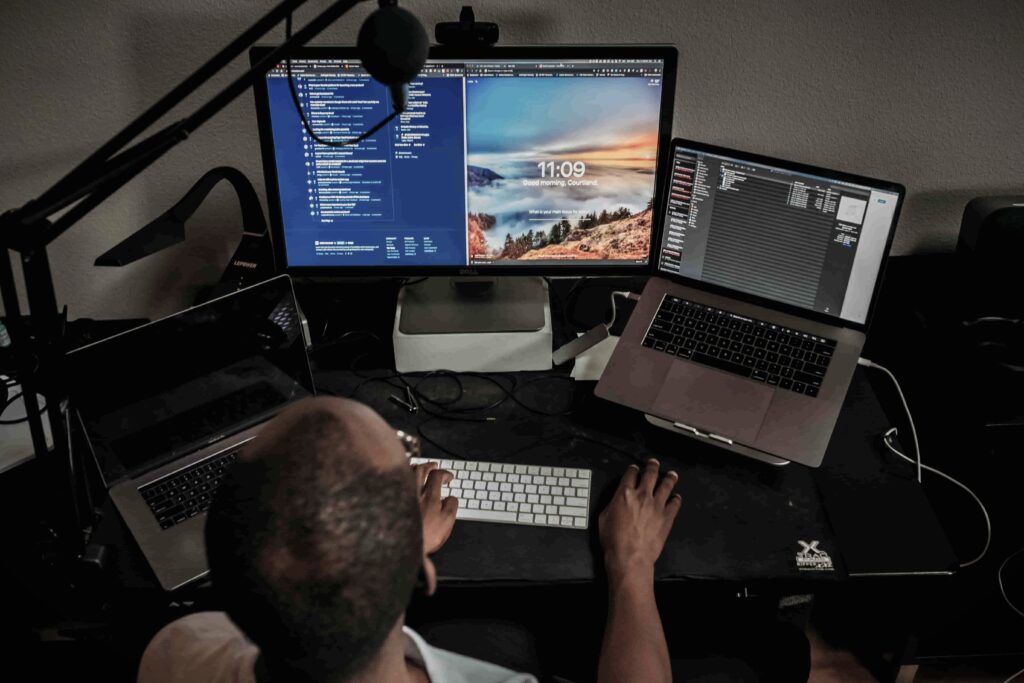
Something I feel like we don’t talk nearly enough about is how heavy it actually is to stay creative on demand.
From the outside, content creation looks like the ultimate freedom. You get to express yourself, build a personal brand, and maybe even make money doing what you love. But there is a quiet, heavy side to this industry that rarely makes it into the final cut or the polished Reel.
I have to tell you, the mental exhaustion behind content creation goes way beyond just being “tired.” It’s a specific kind of fatigue that happens when your creativity, your identity, and your income are all tied to platforms that never sleep. We talk a lot about hustle culture, consistency, and going viral, but we don’t talk enough about the cognitive and emotional toll of constantly being “on.”
For someone like me, who quit a traditional job to focus fully on building an online presence—phewwww… don’t even get me started on the emotional turmoil. The hustle culture here is, in many ways, more dreadful than the industry I left behind. The only difference is that I’m not answering to a boss, which requires a whole new level of discipline to scale my brand. There are days when I simply don’t have the energy to write, shoot, or edit because my brain feels like a browser with fifty tabs open and all of them are frozen.
One thing I took with me from my previous career is the realization that feeling this way isn’t laziness. It is a warning sign that I’m getting depleted. So, let’s pull back the curtain and talk about why this exhaustion happens, the signs you might be ignoring, and how to protect your peace while still doing what you love.
What Mental Exhaustion Behind Content Creation Really Is
This isn’t just about working long hours. Even if you only schedule five hours a day to work on your content, it’s a deeply layered form of fatigue. It’s not just physical; it’s a drain on your very essence. Let’s break down the four layers of this exhaustion:
1. Creative Fatigue
Creative fatigue starts when you are constantly “mining your mind.” You’re not just posting; you’re expressing, branding, and positioning yourself. If your content is personal—focused on mindset, healing, or self-development, it takes even more out of you.
Sharing your life requires a level of vulnerability that is physically taxing. After you post something personal, you might experience a “vulnerability hangover.” It’s that nagging anxiety about how you’ll be perceived, which keeps your nervous system in a state of high alert long after you’ve hit publish.
2. Cognitive Fatigue (The Decision Tank)
We often underestimate the volume of micro-decisions creators make daily. Even a 60-second video involves hundreds of choices:
- What is the hook?
- Is this lighting authentic enough?
- Should I cut this frame at 1.2 seconds or 1.5 seconds?
- What caption will trigger the most engagement?
By the time you finish production, your decision tank is empty. This is why many creators can’t even decide what to eat for dinner after a day of editing. This invisible labour wears down your cognitive reserves faster than almost any other type of work.
3. Identity Fatigue
For many of us, content is life. Your healing becomes a caption. Your lessons become reels. Your struggles become relatable content. While impactful, it means you’re never fully off-duty. A sunset isn’t just a sunset; it’s potential b-roll. A hard day isn’t just a hard day; it’s a possible story. When your brain can no longer experience life without mentally framing it for an audience, exhaustion becomes inevitable.
The Performance Trap and the Invisible Boss
One of the biggest drivers of mental exhaustion behind content creation is that the work is inherently personal. We aren’t filing spreadsheets; we’re publishing pieces of ourselves.
The Performance Trap
Every post becomes a subtle performance. It’s not necessarily fake, but it is curated. Strategized. Slowly, we fall into a trap where our self-worth is tied to analytics. Low views feel like personal rejection; high views create anxiety about how to maintain that momentum. When performance metrics start influencing how you see yourself, you are adding emotional labour on top of creative labour.
The Algorithm as an Invisible Boss
Lets face it, we are working for an unpredictable, invisible boss: the algorithm.
It doesn’t explain itself. It doesn’t guarantee stability or visibility, but we put our all into serving and creating just because… And because “IT” doesn’t sleep, and it’s fast-paced, that can sometimes create chronic hyper-vigilance:
- “If I take a break, my reach will drop?”
- “If I don’t post today, I’ll disappear.”
- “If this flops, then it’s my fault.”
And staying in scan mode, constantly analyzing trends, engagement patterns, and timing, is really exhausting. Even if you don’t use existing trends, creating your own is not an easy task; it requires trial and error to know what works.

Signs You’re Hitting the Wall
The love for our craft can blind us to warning signals until burnout forces a total stop. Here are the signs that your brain is asking for relief:
1. Creative Aversion: You used to love creating, but now opening your editing app makes you feel irritated or overwhelmed.
2. The Fog: You stare at the screen for an hour but struggle to execute even the simplest task.
3. Irritability Over Metrics: Slight dips in engagement feel like personal failure.
4. Comparison Paralysis: You spend more time scrolling through other people’s trending posts and feel like your own content is not good enough.
5. Emotional Numbness: Milestones you once prayed for (like hitting a follower goal) don’t excite you anymore.
6. Physical Cues: Tension headaches or poor sleep.
Beyond the physical symptoms, mental exhaustion shows up in the way we handle our craft. You might find yourself:
1. Procrastinating on posts that are already finished and sitting in your drafts.
2. Second-guessing every word until a simple caption feels like a high-stakes exam.
3. Creating from obligation rather than inspiration. Going through the motions just to feed the beast – the algorithm.
4. Fantasizing about hitting “Delete Account” and disappearing from the grid entirely (trust me, I am very guilty of this one).
If any of this sounds familiar, please hear me: This is not a sign that you aren’t built for this. It is a sign that you are human and your capacity is finite. Pushing through the fog doesn’t make you more disciplined; it just makes you more depleted. You can’t hustle your way out of a drained nervous system.
Practical Ways to Reclaim Your Mental Space
You can’t change how the platforms operate, but you can change how you interact with them:
1. The Analog Buffer
Give your brain a chance to exist in its own reality. Have at least one hour in the morning and one hour at night with no screens. No analytics, no scrolling, no reacting.
2. Batching Over “Real-Time”
The “always-on” feeling is what kills creativity. By batching your content, creating in high-energy windows and scheduling it out, you permit yourself to be truly offline. This turns rest into something intentional rather than reactive.
3. Diversify Your Identity
You are more than your niche. Find hobbies that have nothing to do with your brand, and don’t post about them. Cook more, join a local sports team, or even garden. Let that part of your life belong only to you. It creates a psychological safety net.
4. Audit Your Digital Environment
If looking at a certain creator’s perfect life makes you feel drained or inadequate, hit the mute button. You don’t owe anyone constant access to your headspace. Your feed is your digital workspace; it should be a place that inspires you, not a courtroom where you are quietly judged and found wanting. If it doesn’t add to your peace, it doesn’t belong on your screen.
5. Define What Enough Looks Like
Stop trying to match the pace of someone who has a ten-person team when it’s just you and your phone. Decide your own standard. Ask yourself: What frequency is sustainable for me?
- Is it two high-quality posts a week?
- Is it three intentional stories a day?
- Is it one soulful newsletter a month?
Whatever it is, own it. Stop measuring your volume against someone else’s capacity. In this industry, longevity is much more powerful than a short-term spike that leads to a long-term crash.
6. Schedule Intentional Breaks
I’m not talking about the “I can’t move because I’m burnt out” breaks. I’m talking about proactive, planned rest. Put it on the calendar. Tell your audience you’re stepping away, or maybe don’t, and just disappear for a while. You’ll find that the world doesn’t stop turning when you stop posting.
7. Practice Perspective and Detach Your Worth
One of the fastest ways to drain your battery is to constantly minimize your own progress. We’ve all done it, we look at a post and complain about only getting 100 views.
Social media has distorted our perception of scale. It makes hundreds feel insignificant, and thousands feel “average.” But behind every digit on your screen is a real human being who chose to stop, watch, and listen to what you had to say. That matters.
Most importantly: detach your worth from your output. You are not your engagement rate. When you separate your identity from your metrics, you finally give yourself room to breathe. You stop performing for validation and start creating from alignment.

Conclusion
All things considered, mental exhaustion is not a badge of honour or the price of success. It is a signal that your system needs maintenance. We live in a culture that celebrates “more, faster, better.” But the creators who actually last are the ones who protect their mental longevity.
Be kind to yourself. You’re building in an industry that didn’t even exist generations ago. It’s okay to be tired. And it’s more than okay to rest. Content creation should support your life, NOT consume it. You got this. Keep shining.
If this resonated with you, share it with another creator who might be struggling with mental exhaustion.
RECOMMENDATION
If you need help or know someone struggling with their mental health, please visit our resource page.